
BAKKER PFI Learning Centre
Understanding Passive Fire Protection
Learn how passive fire systems protect buildings, understand common compliance issues, and discover how inspections and fire compartmentation work.
Why Passive Fire Matters
Protecting Buildings & Saving Lives
Passive fire protection helps contain fire and smoke within buildings, protecting escape routes and slowing the spread of fire between areas.
Unlike active systems such as sprinklers and alarms, passive fire systems are built into the structure of the building itself.
Walls, floors, ceilings, fire doors and fire stopping systems all work together to form the building’s passive fire protection system.
Learning Topics
Passive Fire Basics
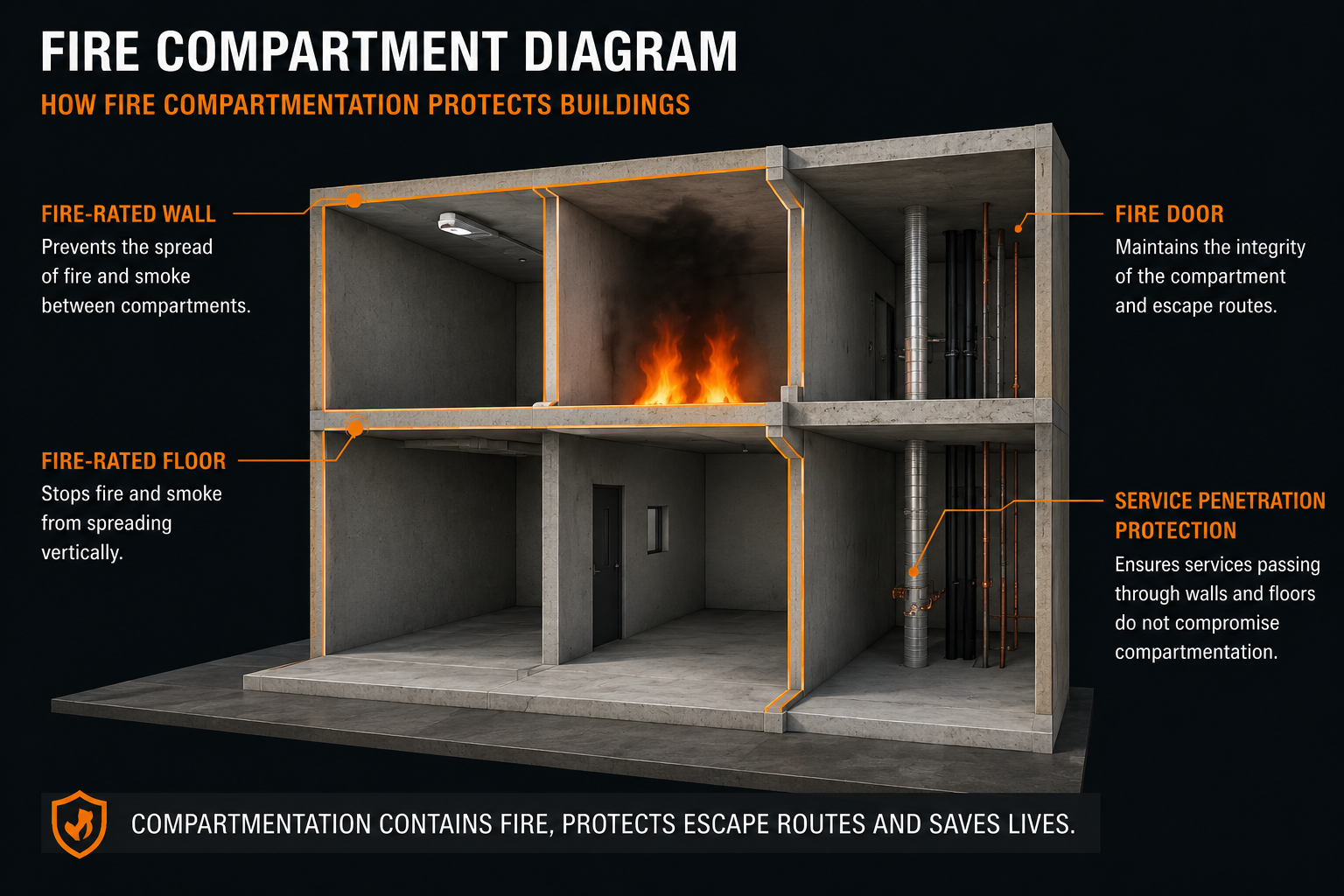
What Is Passive Fire?
Understand how passive fire systems help contain fire and smoke within buildings.
Fire Compartmentation
Learn how buildings are divided into fire compartments using walls, floors and ceilings.
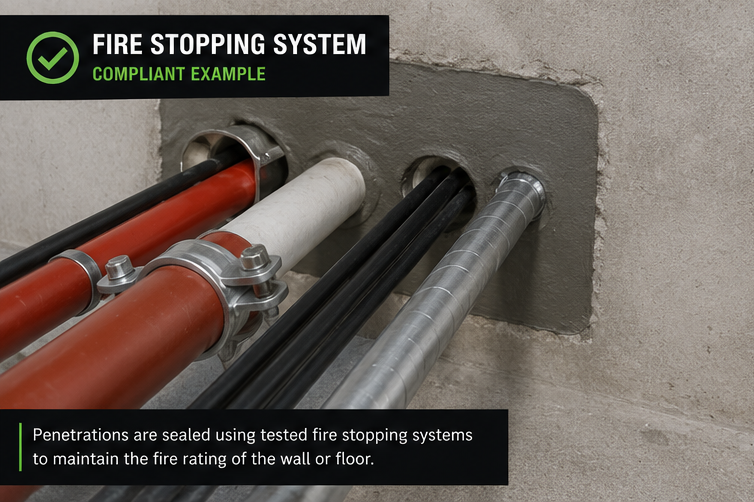
Service Penetrations
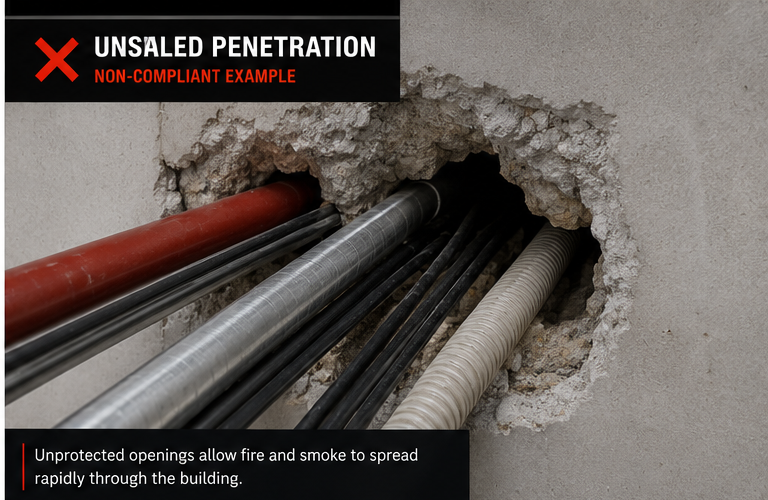
Understand how pipes, cables and ducts passing through fire-rated walls must be protected.
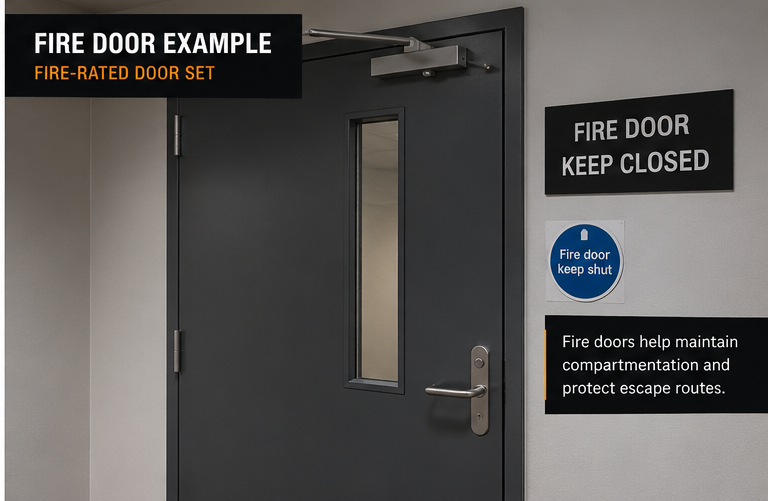
Fire Doors
Learn how fire doors protect escape routes and help maintain compartmentation.
Common Passive Fire Defects
Explore the most common passive fire issues identified during inspections.
Inspections & Compliance
Learn how inspections and compliance reporting support building fire safety.
Fire Compartmentation
How Passive Fire Systems Work
Buildings are divided into fire compartments designed to slow the spread of fire and smoke.
When services such as pipes, cables or ducts pass through fire-rated walls or floors, those openings must be properly protected using tested fire stopping systems.
Fire doors, smoke seals, fire-rated walls and penetration systems all work together to maintain the building’s fire compartmentation.
Common Defects
Typical Compliance Issues
Interactive Learning
Passive Fire Basic Understanding Guide
BAKKER PFI Pte Ltd is developing an interactive learning guide designed to help FSMs, building owners and facilities managers gain a practical understanding of passive fire protection systems.
Certification
Basic Passive Fire Understanding Certificate
Future learning modules will include a basic understanding quiz allowing participants to receive a BAKKER PFI Passive Fire Understanding Certificate.
Real Building Inspections
Explore Real Passive Fire Inspection Examples
View real-world examples of passive fire defects, compliant systems, fire doors, penetrations and fire compartmentation inspections.
Interactive Learning
Test Your Passive Fire Knowledge
Complete the BAKKER PFI Passive Fire Basics Quiz and receive your personalised Passive Fire Understanding Certificate.